Lightly sweet, often sweet-salty
A pinch of saltPalm sugar gives a round sweetness, and a pinch of salt lifts the coconut milk.
The road journal · street sweets
At a night market, dessert comes in a glass, a banana leaf or a bowl of shaved ice. Here is the logic behind these sweets, and a tour of the five countries on the road.
Contents
End of the meal, night market
At the end of a night market meal, you're handed a tall layered glass or a bowl of melting shaved ice rather than a slice of cake.
This article explains the logic of these sweets, then tours Vietnam, Cambodia, Laos, Indonesia and Malaysia.
The logic
Four traits come back from one country to the next.
Read these desserts in layers: a base, something to chew, and a finishing touch.
The pantry
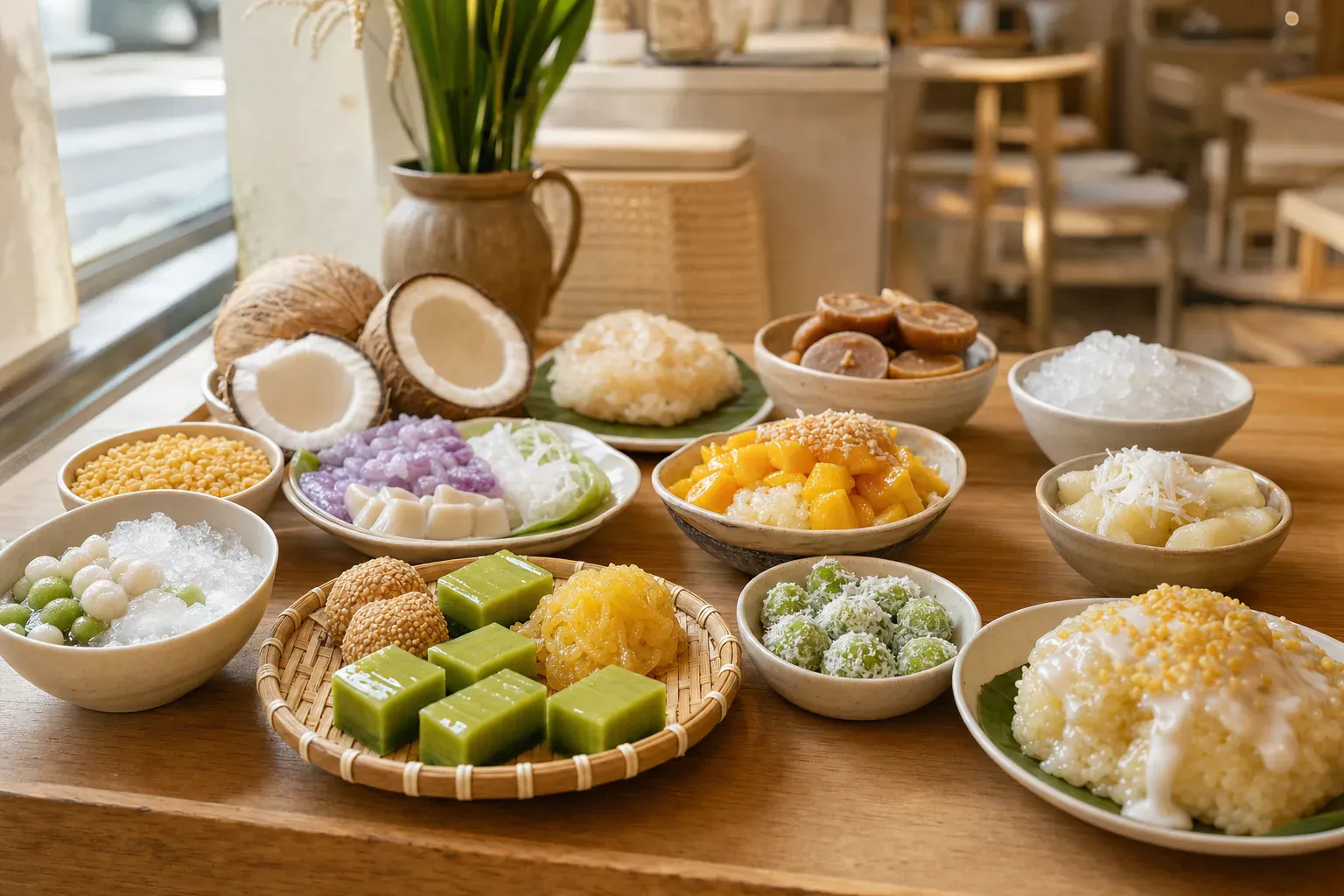
The same ingredients appear across the region, combined in different ways.
The binder of almost everything, often lightly salted.
Steamed grains or a supple dough for balls and layered cakes. More in our sticky rice guide .
A fragrant green leaf, the 'vanilla' of Southeast Asia.
They bring the soft and chewy bite.
A dark, caramel-like sugar from palm sap.
Mango, banana, jackfruit and durian, over fine ice.
Five countries, five ways
We follow the five countries on Asian Road's route; for savoury food, see our guide to Southeast Asian specialities .
Chè ba màu layers beans, pandan jelly, coconut and ice; bánh flan is a caramel custard.
More in Vietnam street food.
A sticky rice cake in banana leaf, and a coconut custard baked in a pumpkin.
More in typical Cambodian dishes.
Sticky rice with fruit or coconut, and khao lam cooked in bamboo.
More in typical Lao dishes.
Pandan rice balls with a palm sugar heart, mixed shaved ice and sweet porridges.
More in typical Indonesian dishes.
Pandan jelly in coconut milk with palm sugar and ice, shaved ice towers and bite-size kuih.
More in typical Malaysian dishes.
An honest note
It is mostly associated with Thailand, which is not one of Asian Road's five countries, and is shared by its neighbours, including Laos: a regional dessert.
At a glance
The sweets in this article, by country.
| Dessert | Country | Main ingredients | Texture | Hot / cold |
|---|---|---|---|---|
| Chè ba màu | Vietnam | Mung bean, red beans, pandan jelly, coconut | Soft, jelly, icy | Cold |
| Klepon | Indonesia | Glutinous rice flour, pandan, palm sugar | Chewy, oozing | Room temp. |
| Cendol | Malaysia | Pandan jelly, coconut, palm sugar, ice | Slippery, icy | Cold |
How-to
A few habits to eat these sweets like a local.
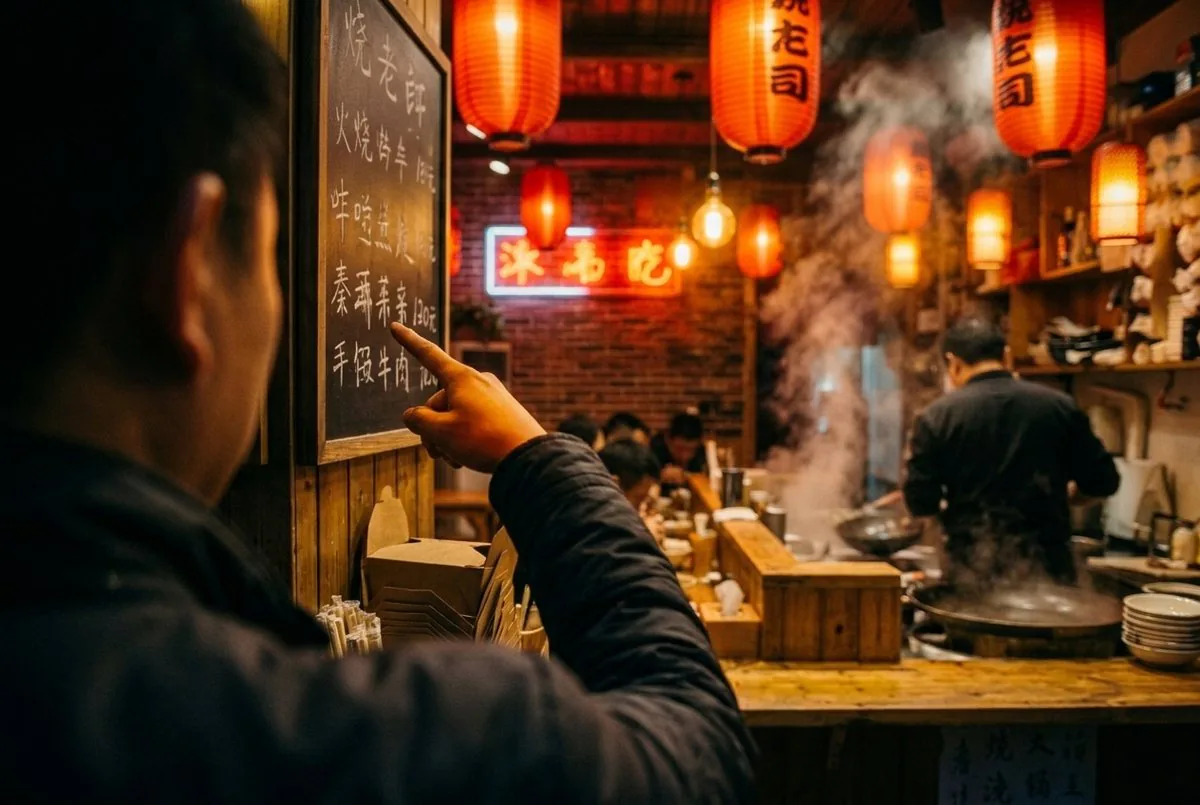
Iced desserts cool you down when the heat rises.
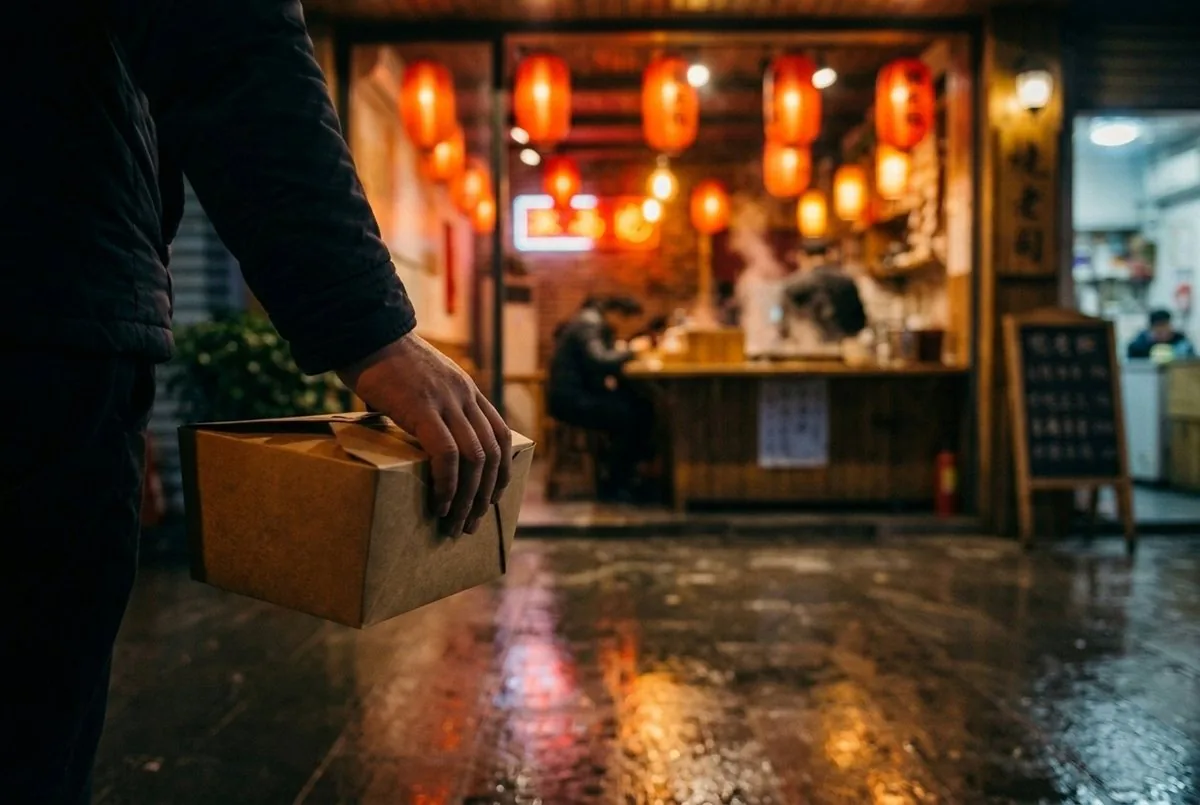
Small portions and bite-size sweets bought by the piece.
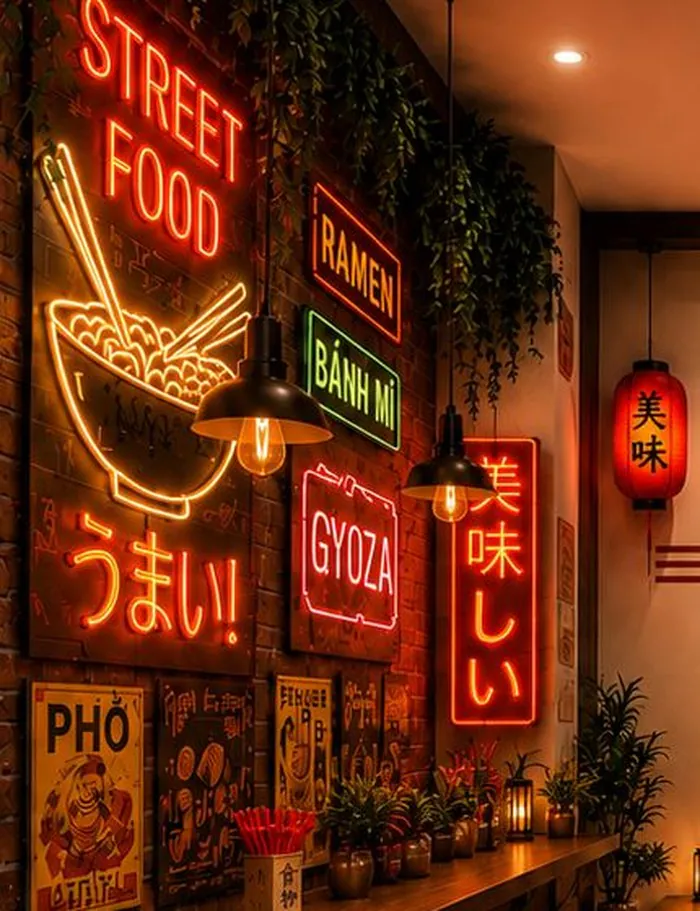
Shaved ice bowls are shared; a glass of chè is usually one each.
Taste the road味わう道
Sweet Road
Sticky rice naturally coloured with the season, with sweet coconut milk or grated coconut as you prefer, finished with touches of gold.
The last stop on Asian Road's menu brings sticky rice, coconut and natural colour together in one dessert.
All the details: the Golden Sticky Rice of the Sweet Road, and the Golden Sticky Rice page.
Asian Road opened on Friday 2 October 2026, at 9 rue Laurent Fauchier, 13100 Aix-en-Provence.
Frequently asked questions
Going further
To end your box on a sweet note, discover the Sweet Road, or see the full menu.
The dessert of the road, for real: dessert asiatique aix-en-provence.
Discover the Sweet RoadSee the menu
Keep reading