Sambal
chilliPounded chilli paste, both condiment and cooking base.
The road journal · Malaysia stop
Three cuisines on the same street, sometimes on the same plate: Malaysia eats Malay, Chinese and Indian at once, and that blend is its table.
Contents
Before sitting down
On the Strait of Malacca, Malaysia welcomed traders for centuries; Malay, Chinese and Indian communities each kept and reshaped their cooking.
Peranakan (nyonya) cuisine was born from their meeting. Meals follow no fixed order and are often eaten outdoors.
The pantry
A few ingredients shape almost every Malaysian dish.
Add lemongrass, galangal, tamarind and Indian dry spices, and you have the Malaysian palette.
Nasi lemak, 'rich rice', is Malaysia's emblem. The classic plate includes:
Often sold wrapped in banana leaf; the sambal is the true test of a good stall.
The street, morning to night market
Malaysia's most typical food lives in hawker centres and weekly night markets. Three dishes stand out.
Marinated skewers grilled over embers, served with peanut sauce and rice cakes.
Flaky flatbread dipped in dhal or curry, served late into the night.
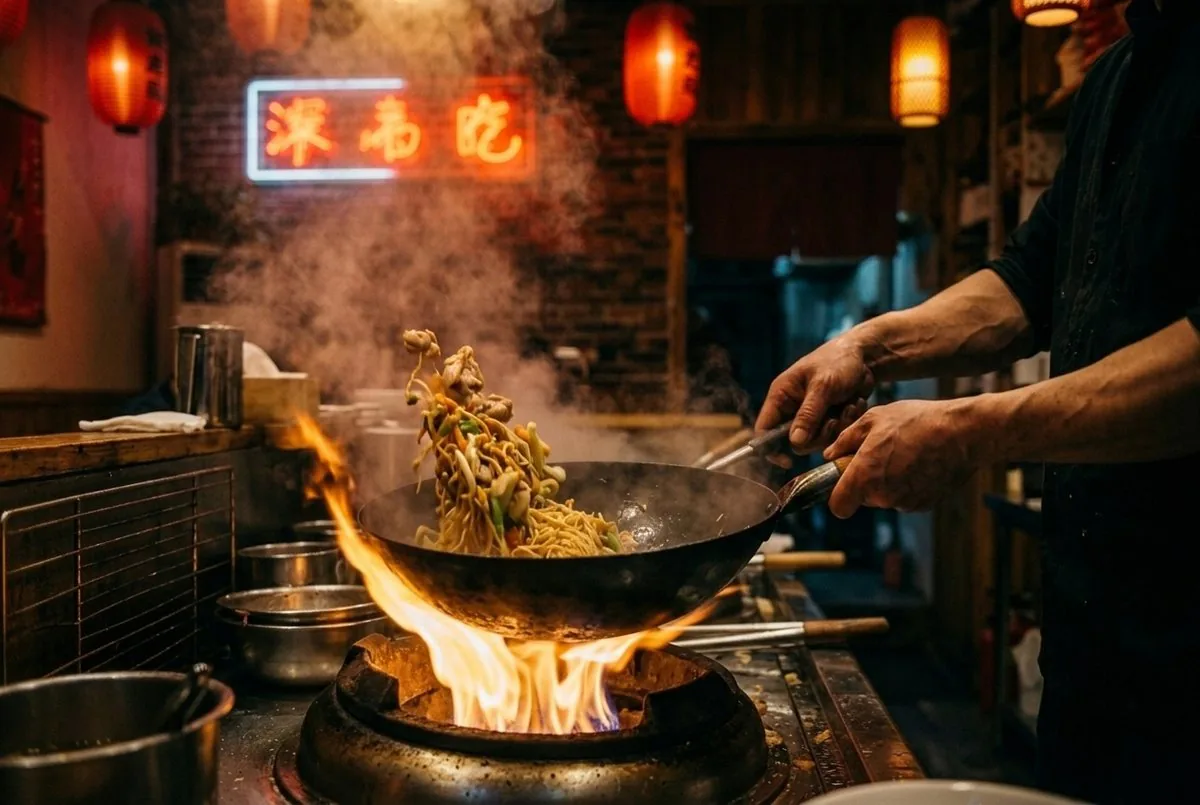
Flat rice noodles stir-fried over high heat for a smoky 'wok breath'.
Malaysia is eaten at a shared table味わう道
Curry laksa has a rich coconut broth; Penang's asam laksa is sour, fish and tamarind based, with no coconut.
Sarawak, Johor and Kelantan each have their own version.
Journal tip: use chopsticks and spoon together to taste broth and noodles at once.
Wok and bowl
Mee goreng mamak blends Chinese noodles, wok cooking and Indian seasoning; wantan mee and hokkien mee stay closer to Chinese roots.
Stews, rice and broths
Dishes for feasts and big tables, each carrying a community's mark.
Also try banana leaf rice, eaten with the right hand.
A sweet ending
Coconut, palm sugar and pandan rule Malaysian sweets.
Trust specialised stalls, eat dishes at their proper time and taste flavours together.
And on the Asian Road route
No fixed country, no dogma: what works together wins.
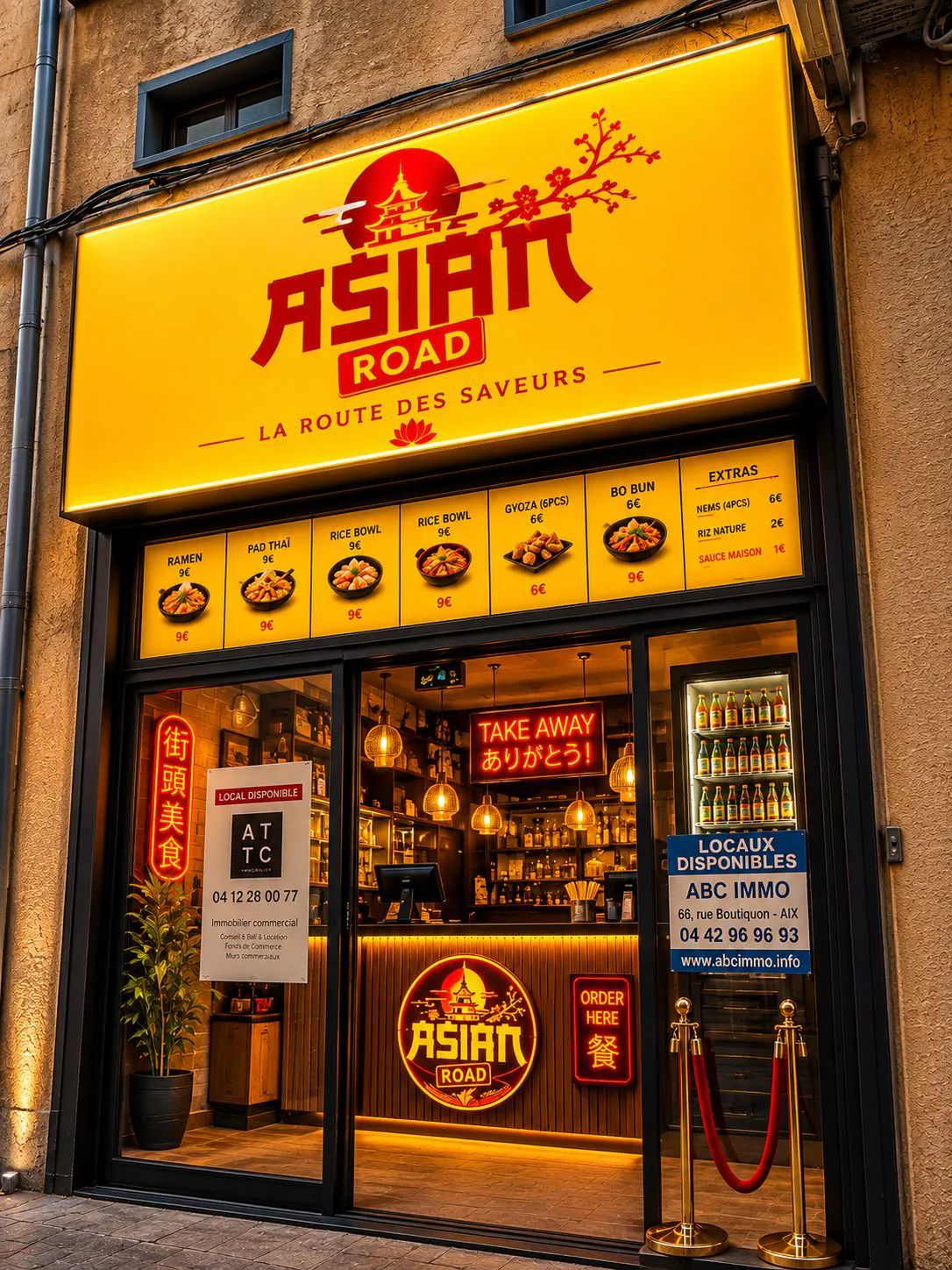
Asian Road is not a Malaysian restaurant: it is Southeast Asian street food with no fixed country, in central Aix-en-Provence.
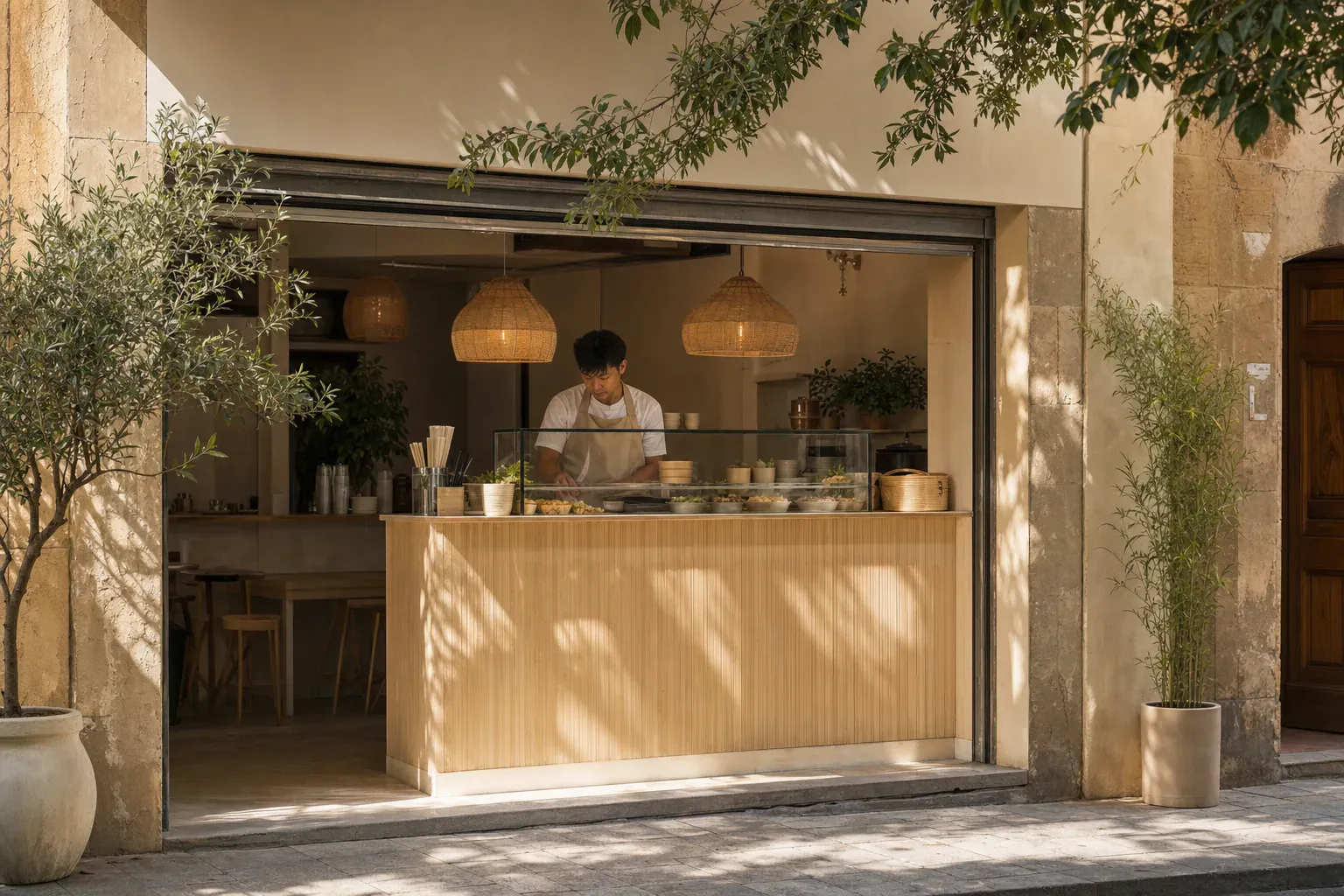
From Malaysia, the road kept noodles and the taste for blending, served from the wok in a box you build yourself.
To see what the road keeps from this stop, visit the Malaysia stop.
FAQ
Further reading
Malaysia closes the route; the rest of the journey is in the journal.
Keep on the road